

By Institution for War and Peace Reporting
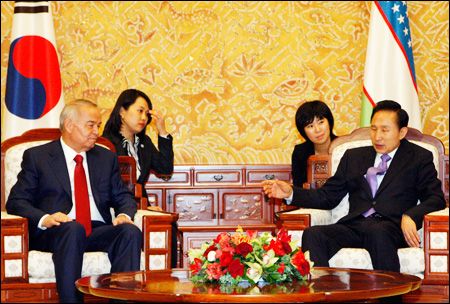
South Korean firms are to explore for oil and gas in Uzbekistan after Uzbek President Islam Karimov, during a state visit to South Korea on February 10-12, signed an agreement for investment that could be worth more than US$3.5 billion in developing the Surgil gas field and building a chemicals plant.
Surgil is on the northwestern Ustyurt plateau, which has 16 known deposits of oil and gas. The Korean investment should boost development of the plateau’s resources. Once the gas processing plant is up and running, it will produce polypropylene and polyethylene plastics, some of which will be exported to Russia and Iran.
Economic analysts say the Surgil gas plant should allow
Uzbekistan to reduce exports of natural gas in favor of plastics, which will earn it more money and help its beleaguered economy.
“They want to launch primary processing of gas and sell products with a high added value on foreign markets,” says Viktor Ivonin, an economist in Tashkent.
The South Korean investment has been on the cards since 2008, when Uzbekneftegaz and a consortium led by Korea Gas Corporation set up a joint venture, but there was a delay to signing off on the deal.
“Last October, one of the consortium participants announced that the enterprise would be launched in 2014 rather than 2012,” said an Uzbek oil and gas expert who asked not to be named. “The main argument for postponing it was that the cost estimates had more than doubled.”
Initially the gas plant was costed at US$1.85 billion, but this has since increased. During Karimov’s visit to South Korea, the figure being mentioned was $3.5 billion. As the oil and gas expert noted, “There’s no guarantee that this is the final figure.”
The reasons for the increase are unknown, but NBCentralAsia analysts say it may be connected with uncertainty over the size of the Surgil gas deposit.
(This article originally appeared in Institute for War and Peace Reporting. Used with permission.)
 Mohammed Abbasi