

The naked truth —Farrukh Khan Pitafi

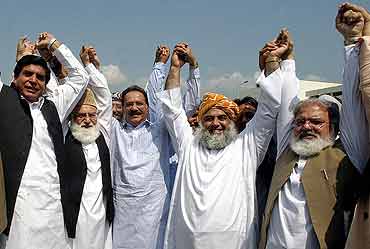
The pious ones in the Islamic republic, who cannot digest the image of a newscaster sitting without a scarf on her head, have hardly any issue with gory and violent images on the screen
Dr Amartya Sen is known
for his work in welfare economics and the Nobel Memorial Prize in Economic Sciences that he received. But our knowledgeable ones, so effectual at connecting dots, have not traced him back to another of his interesting works — that of procreation. His daughter Nandana Sen is consistently building her reputation as not only an established actress, but also a hot siren in Bollywood. For the last two years she was in the news for her controversial role in the movie Rang Rasiya or ‘Colour of Passion’. Ketan Mehta’s portrayal of the life of 19th century Indian painter Raja Ravi Varma, apart from pushing quite a few boundaries, also features a nude scene performed by Nandana Sen. While the scene is said to have been shot quite aesthetically and is said to be an inextricable part of the movie’s plot, the Indian Central Board of Film Certification quite understandably found faults with it and advised a review.
This small anecdote reminded me of the Pakistan Television (PTV) dramas in which a drowning girl or woman is rescued with her dupatta still intact. Never mind her life, her modesty needed to be preserved. It is beyond my comprehension that, while Pakistan is so marred with ideational contradictions and parochialism courtesy the repeated assaults of authoritarianism and absolutism, why should an established democracy like India live in such a state of denial? Is it perhaps because India might be freer, by far, than Pakistan, as, since independence, the people of both countries have endured almost a shared experience of foreign and domestic oppression before being liberated?
In any case, the story of our state is sorrier still. I do not want to challenge any deeply held beliefs but only point out that our consistent refusal to admit what is evident to our eyes is hurting even these beliefs. For instance, when circumstantial nudity is not permitted even in theatres or television, it is quite natural for a shadow industry to evolve under the very nose of the censor board. And, since society at large refuses to accept the very existence of the said industry, it devises no means to regulate it. Uncountable abuses like child abuse, breach of privacy, forced pornography and even recorded rapes become the norm of the day.
Of course, a number of excuses are given to maintain this state of denial. One such argument is that televised nudity exacerbates sexual frustration and, hence, results in crimes like rape. Interestingly, if this argument is to be accepted at face value, Pakistan should not have witnessed the high ratio of sex related crimes we are accustomed to. But that, clearly, is not happening. Until the state finds some better means of stopping such crimes, it must be said that only truthfulness can spare us an inundation of such unwanted hazards. For instance, while many may pretend otherwise, ours is not a monolithic or sacrosanct society but a rather complex one. Even during Ziaul Haq’s time, pornographic content was usually freely available in the video stores. Today, downtown stage shows also cater to the baser needs of men with a travesty for striptease. Why are the DVDs of such shows available openly in the market? Sorrier images you will never see.
But, since we are in absolute denial, this trade is booming. Those who oppose censorship relaxation on the grounds that it affects family values also seldom pause to reflect. While I am at a loss as to how on earth any set of images can affect family values, even if we accept that such a thing can ever happen, the current crude state of affairs is bound to hurt these values far more visibly. For instance, in civilised parts of the world, where sense has already prevailed, there are methods to regulate such content. When a movie is released it is given an age rating certificate. Likewise, even on television this method is visible. So all that parents have to do is bring home parental control technology and the problem is solved. The same rules apply to the cinema.
Since in both India and Pakistan the censorship board refuses to approve nude scenes, albeit circumstantial, it often happens that even in movies with innocent storylines there appears a song or a scene that makes the entire movie unwatchable for minors. And, of course, it is not only about nudity or sexual depiction alone. Since there are no age rating standards for films and television, the actual harm is done by violence portrayed both in the news and entertainment. But somehow the pious ones in the Islamic republic, who cannot digest the image of a newscaster sitting without a scarf on her head, have hardly any issue with gory and violent images on the screen. No doubt then that, apart from the severed heads of terrorists being displayed on television, our children have to endure the footage of animals being slaughtered on the pious days of Eid-ul-Adha.
But parental approval and the child’s mental growth are not the only things that are affected. The most important casualties of this sorry state are taste and aesthetics. When societies are obsessed with both denying something as obvious as this and keep this booming industry alive on the sidelines, culture becomes a wafer thin excuse for such activities. And every cultural activity is replaced with poor sex-oriented performances. This cannot be tolerated for the sake of art or culture, whether nude or non-nude.
Then let us face it: there is nothing obnoxious about the depiction of the human body without clothes. We overreact because we are not mature enough to make the clear distinction between art and erotica. The moral brigade too behaves as if all religions in the world were revealed, not to end the exploitation of mankind and to help the oppressed, but to stop the spread of nudity and obscenity. This, however, is not true. And then, no matter how much such fellows struggle to keep us in the Stone Age, the internet and the sheer bravado of those who love art and culture ensures that no censorship can stop the forces of change. For a country that is so helplessly lagging in the arts that it has no distinct architectural or cultural identity of its own, this piece is a desperate appeal to reflect.
The writer is an independent columnist and a talk show host. He can be reached at farrukh.khan@pitafi.com
 Mohammed Abbasi