

Can termite mounds inspire eco-cities?

Architects could model sustainable developments on termite mounds
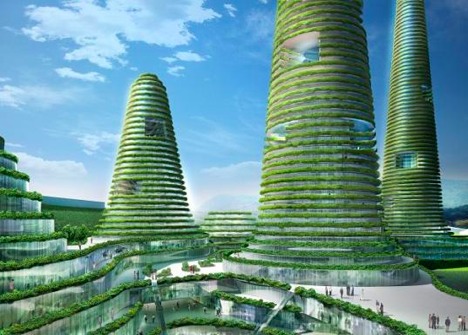
Architects working on models of sustainable development are turning to a new and rather unusual source of inspiration: termite mounds.
Built entirely from natural, biodegradable materials, the looming, curiously shaped mounds dotted around the African savannah are both air-conditioned and humidity-regulated without consuming a single watt of electricity.
Swiss entomologist Martin Luscher was researching the eco-credentials of termite mounds as far back as the 1960s, suggesting that modern architects might be able to learn a thing or two.
Now, as developers wake up to the potential dangers of climate change and resource depletion, New Scientist reports how these eco-friendly termite cities are reawakening interest in how insects manage their built environments.
“We can develop absurd architectural ideas without the punishment of natural selection,” says architect Juhani Pallasmaa of the Helsinki University of Technology in Finland.
Termite mounds incorporate a unique heating and cooling system, which essentially functions like a pair of giant lungs.
Indeed this idea has already spawned at least one artificial imitation: the Eastgate Centre in Zimbabwe, designed by architect Mick Pearce, which opened in 1996.
Scott Turner, a termite expert at the State University of New York, believes the porous walls of termite mounds are designed to tap turbulence in gusts of wind, allowing fresh air to be blown in through vents and flush stale air out.
“We could turn the whole idea of the wall on its head,” claims Mr Turner, who suggests walls should not be thought of as barriers, but rather adaptive, porous interfaces able to regulate the exchange of heat and air.
“Instead of opening a window to let fresh air in, it would be the wall that does it, but carefully filtered and managed the way termite mounds do it,” he said.
http://www.sidewaysnews.com/science-technology/can-termite-mounds-inspire-eco-cities
 Mohammed Abbasi