

By Charles McDermid
SULI, Iraqi Kurdistan – At about the same moment on Sunday when United States President Barack Obama was in the White House Rose Garden praising a relatively peaceful voting day in Iraq, revelers in this northern city were blasting handguns and Kalashnikovs into the sky, often from speeding vehicles, in their own show of happiness for a day that will be a defining event for the nation, and Obama.
Earlier in Baghdad, Apache and Blackhawk helicopter gunships hovered over the city as residents braved a morning of deadly terrorist attacks to take part in the country’s second parliamentary elections since the toppling of Saddam Hussein in 2003; a democratic process still in its infancy after seven years of American occupation.
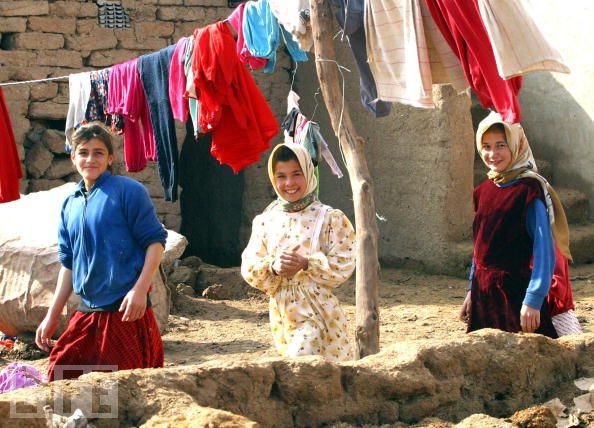
The average Iraqi complains of security problems, joblessness and poor public services, namely electricity. The average American bemoans a misguided invasion that has cost lives, international standing and shrinking national treasure. A botched election, or worse, a return to the internecine sectarian bloodshed that followed the 2005 vote, would shatter the hopes of both camps.
Obama, who campaigned on a promise to bring home US troops that were deployed by his predecessor, has come under increased pressure for failing to prioritize Iraq . Critics say the job is being left half-done, forcing Iraqis to relive the trauma and political bickering that has made progress nearly impossible for the past 30 years of misrule and war. Doves in America say that troops should be home already, the money and time spent elsewhere.
 Coming off defeats on domestic issues and facing tough mid-term elections, the Obama administration could ill-afford another black eye in Iraq . Earlier this year, Obama and Vice President Joe Biden personally intervened to coax reluctant parties to accept an election law and smooth over simmering political disputes. American troops on the ground have been engaged in trilateral programs meant to ease a standoff between Kurdish and Arab armies in disputed areas such as Kirkuk .
Support for the election came from unlikely sources: Iraq’s Sunni Muslim minority, which largely boycotted the 2005 vote, had agreed to take part, while violently anti-American cleric Muqtada al-Sadr had spurred his followers to vote en masse to “end the foreign occupation”. In recent weeks, a boycott was narrowly avoided amid a purge of politicians with links to Saddam’s outlawed Ba’ath party, and secular parties were said to be gaining support.
The were signs that Iraq could be poised to enter a post-election period of stability with a government no longer dominated by ethno-sectarian quotas or requiring the 100,000 US combat troops still stationed in the country. As some analysts pointed out, the geopolitical stakes had never been higher.
“[Obama’s] handling of Iraq in the next six months could determine whether it ends in success – with US troops withdrawing from a stabilizing democracy that is a US ally – or leads to a victory for Iranian interests or a civil war that could destabilize the entire Middle East,” declared an editorial in Sunday’s Washington Post titled “Endgame in Iraq”.
With this backdrop, millions of Iraqis went to the polls on Sunday to select – from more than 6,000 candidates from 86 political parties – 325 seats in parliament that will, after a period of political bargaining and coalition-building, forge the next government. Preliminary results will emerge on March 10-11, and the Supreme Court has one month after appeals to validate the process.
For several days, F16 fighter jets had screamed over the capital, Baghdad residents told Asia Times Online, and on Sunday more than one million security troops were deployed across the country. Just after sunrise, attacks began in Baghdad. Twenty-five people were killed when a mortar round smashed into a housing complex in a Baghdad neighborhood. There were additional strikes across the city involving homemade explosives, small arms and Katyusha rockets, according to local media. Officials claimed security teams found and disarmed as many as 16 improvised bombs at polling stations around the city.
By nightfall, the death total that had been steadily climbing all day, stood at 40.
Despite the violence, the election was hailed a success. United States Secretary of Defense Robert Gates told the Associated Press that there was “surprisingly little violence” and that the turnout was “high or higher than expected”. Electoral officials estimated it at 60-68%. The United Nations was quick to applaud the Iraqi Independent High Electoral Commission and its 300,000 observers, and the governor of Baghdad congratulated citizens for their bravery. The head of Iraq’s top independent election watchdog, the Shams Organization, told ATol the fraud allegations were less than expected and shouldn’t mar the final results.
Speaking in Washington, Obama told the press, “Today’s voting makes it clear that the future of Iraq belongs to the people of Iraq. Today, in the face of violence from those who would only destroy, Iraqis took a step forward in the hard work of building up their country.”
With the election too close to call, it is certain no political bloc or party will gain the two-thirds majority needed to form a government. What comes next is a period of political bargaining that even optimistic analysts and politicians expect to be lengthy. After 2005, it took parliament almost five months to form a government, leaving the country exposed to terrorist attacks largely attributed to al-Qaeda.
“I am sure the forming new government will take months. The reason is the mistrust between Iraqi politicians and parties. It will be very difficult for the new government to get a vote of confidence in the next Iraqi parliament. Even a Shi’ite-led government cannot go through parliament easily. Before they were united, but now they have different separate lists, and it’s the same with the Kurds and Sunnis,” said Azad Chalak, a member of the Iraqi parliament’s Integrity Committee.
“Any delays in forming a government after the poll will make the problems of Iraqis worse. The threat of attacks is one thing, but Iraq also badly needs services and investment. Actually, the country cannot bear deadlock again.”
Animosity between Sunnis and Shi’ites led to bombings and suicide attacks that paralyzed parts of the country culminating in 2006 and 2007. Since then, improved security has been a campaign hallmark of current Prime Minister Nuri al-Maliki, who has tried to pin himself as a strongman nationalist with a large Shi’ite powerbase. Maliki, whose State of Law Coalition of mostly Shi’ite parties is an early frontrunner, emerged after as a compromise prime minister from the 2005 parliamentary bargaining period.
Experts believe Maliki’s strongest challenge will come from a bitter rival, former prime minister Iyad Allawi, who was installed as premier by the US in 2004 and who is believed to have Washington’s blessing. A Shi’ite secularist who escaped assassination by Saddam’s hitmen in 1978, Allawi heads the al-Iraqiya party, a coalition that includes top Sunni leaders and secular politicians.
After voting on Sunday in Basra, 30-year-old civil servant Rasha Salim gave her reason for supporting Allawi: “I voted for Iraqiya. I believe that Allawi enjoys a strong personality just like Saddam Hussein, and he is the one who will fulfill my dreams.”
Salim continued, “He is the one who will work on providing services and security. The political climate is going to change for the best and many delayed issues are going to be solved. This government will be more credible than the previous one especially after US forces pull back. I think that these elections are very important, at least to change the parliament to a better one.”
Analysts expect the bargaining period to make for some complex arrangements and perhaps intriguing political bedfellows. A new opposition party has split the longstanding Kurdish bloc and has indicated it would be open to alliances with non-Kurdish blocs; secular movements could bring together dissatisfied Sunni and Shi’ite parties, and there are compensation seats for Christian, Turkomen and other minorities. A quota system in place since 2004 requires 25% of parliamentarians to be women.
It all makes for a confounding political equation that will play out in the weeks, if not months, to come. The impending parliamentary dogfight will include wrangling over the appointment of a president, who then nominates a prime minister, who in turn selects a cabinet with an undefined number of seats. Then the selected executive branch goes back to parliament for approval.
With the election complete, how and when the new government is formed will influence Washington’s relations with Baghdad.
In earlier remarks to media, Obama reiterated his goal of removing all US combat forces by August and for all troops to have withdrawn by 2011. Critics have continued to point out that Obama’s goal appears to be removing the troops, rather than building a functioning democracy or keeping the peace between longstanding enemies. This is a common complaint in semi-autonomous Kurdistan, once a staunch US ally that has felt neglected in recent years as Washington has focused on Baghdad.
“I am concerned about Obama’s withdrawal plan and his carelessness about Iraq. Obama should know that the fragile democracy in Iraq depends on how many US troops are on the ground in Iraq,” said Hemin Lihony, a political analyst in Kurdistan .
Last month, Biden set off a storm by saying on a popular talkshow that Iraq “could be one of the great achievements of this administration. You’re going to see 90,000 American troops come marching home by the end of the summer. You’re going to see a stable government in Iraq that is actually moving toward a representative government.”
Savvy journalists were quick to point out that the Status of Forces Agreement was signed before Obama, who opposed many phases of the war in Iraq, took office. Biden was also reminded of his former plan to “Balkanize” the country by dividing it between Sunni, Shi’ite and Kurds. In fact, the driving force behind the 2004 Iraqi constitution that now guides Iraq’s fledgling democracy was staunch neo-conservative L Paul Bremer during his time at the head of the transitional government in Baghdad .
If Obama stands to risk so much from potential fallout in Iraq, some in Iraq wonder whether a possible democratic success story is his to rightfully claim.
Lihony is one of many Iraqis, especially Kurds, who consider George W Bush a hero who overthrew a genocidal madman. He remains bullish on Iraqi democracy but questions Obama’s role in shaping it.
“We Iraqis have proved that people of this region deserve what Western countries have. We have proved that democratic rights are not only Westerns values and rights. We have proved that democratization does work.
“This is thanks to the neo-cons in America. What we have today is traced back to their efforts and hard-fought ideas.”
Charles McDermid is an editor for the Institute of War and Peace Reporting in Iraq.
 Mohammed Abbasi