

Shanghai builds to the skies
B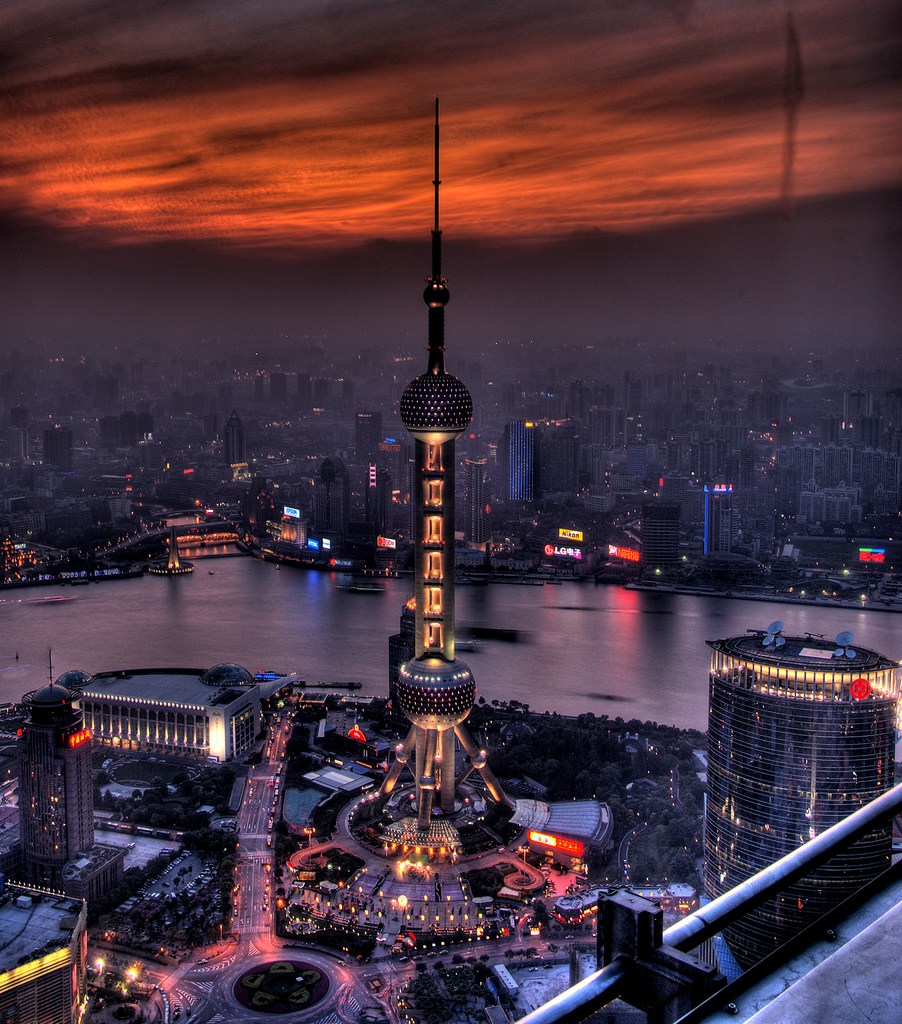 y Daniel Allen
SHANGHAI – Anyone wanting the clearest vision of Shanghai in 2020 should take the lift to the third floor of the city’s dramatic Urban Planning Exhibition Hall. A vast megalopolis in miniature decorates the floor, showing how 25 million-plus inhabitants could be living in harmony and prosperity. A Utopian dream or effective blueprint for orderly development, the next decade will judge the city’s real-life experiment in urban growth.
The 2010 Shanghai Expo opened last month under the banner of “Better City, Better Life“, but China’s largest city had one eye on the future way before it won the bid in 2002 to stage the world fair. Driven by economic and population growth, Shanghai has now experienced more than two decades of innovation in urban planning. Some of the city’s experiments have been more successful than others, and nobody denies the challenges ahead are daunting.
Spencer Doddington, a former architecture student at Shanghai’s
// <![CDATA[// <![CDATA[
//<![CDATA[
var m3_u = (location.protocol=='https:'?'https://asianmedia.com/GAAN/www/delivery/ajs.php':'http://asianmedia.com/GAAN/www/delivery/ajs.php');
var m3_r = Math.floor(Math.random()*99999999999);
if (!document.MAX_used) document.MAX_used = ',';
document.write ("”);
//
// ]]>Tongji University who now runs tours of Shanghai, believes the Expo has already enhanced the city’s livability. “The tangible benefits are numerous,” he said. “There is a growing riverside green belt, industrial contamination has been cleaned up, and the air is noticeably cleaner. We will even have river taxis soon.”
Shanghai’s urban authorities have the city’s growth well in hand, according to architectural historian Anne Warr. “The Five Year Plans are in place, covering transport infrastructure, green spaces, satellite towns, urban hubs and so on. As with all major world cities, Shanghai will be facing the issues of water supply and global warming in the 21st century. Shanghai is built on a muddy river bank and is sinking every year – this problem will only be exacerbated by rising sea levels.”
For the major cause of Shanghai’s subsidence one need look no further than the epicenter of the Urban Planning Exhibition model, where a representation of Pudong’s growing clutch of skyscrapers towers over its surroundings. Ground was recently broken on the tallest of these, the Shanghai Tower, designed by US firm Gensler. At 632 meters, it will be the world’s second tallest building when complete in 2014, after the 828-meter reach of Dubai’s Burj Khalifa skyscraper.

While critics deride Pudong’s ever-rising skyline as an unjustified (and weighty) extravagance – the newly built Shanghai World Financial Center has an estimated vacancy rate of up to 40% – Gensler’s chairman, Art Gensler, is understandably more upbeat. “We hope Shanghai Tower inspires new ideas about what sustainable tall buildings can be,” he said. “We’ve lined the perimeter of the tower, top to bottom, with public spaces, and we’ve integrated strategic environmental thinking into every move. The tower is a stage that comes to life through the presence of people.”
If Pudong is at the core of a reclaimed Shanghai, the results of a radically different experiment are unfolding on the city’s outskirts. There, under Shanghai’s much-publicized “One City, Nine Towns” concept, transplanted architecture from the West is embodied in a series of nine new satellite towns. Situated in a vast ring around the city, the aim is for these residential areas to eventually house more than half a million people, some displaced from the expo site itself.
Hand-picked foreign architects have designed each of Shanghai’s new towns. Pujiang, an Italian-themed town, was laid out on a Roman grid by Gregotti Associati of Milan, complete with a palazzo and system of neo-Venetian canals. While ostensibly Italian, Pujiang looks more like a modern villa complex than a Tuscan idyll, carefully planned to integrate Italian minimalism with the architecture of the hutongs and lilongs (traditional Chinese communal neighborhoods).
Perhaps the most striking new town is Thames Town, an English-style town constructed in the suburb of Songjiang. Laid out around a medieval square by architect Paul Rice of British firm Atkins, Thames Town’s cobbled lanes, Tudor homes, Georgian townhouses and Victorian warehouses compress “500 years of British architectural development into a five-year construction project”.
Completed in 2006, today Thames Town is a bizarre place. property developers have bought up most of the real estate, leaving it with the air of a ghost town. High construction costs translated into high property prices; the average townhouse here, which can cost upward of 6 million yuan (US$900,000), is way beyond the means of most inhabitants of Shanghai, where the average annual income is little more than 30,000 yuan.
“The One City Nine Towns has had mixed success in terms of the initial goals for the program, one of which was to provide housing for the influx of workers into Shanghai,” said Warr. “The cities such as Anting [a German-style town] and Pujiang, where the architects decided just to design a good place to live in without strictly adhering to a national theme, have, in my opinion, been the most successful – aesthetically, commercially and socially.”
Shanghai-based architect Raefer Wallis, of A00 Architecture, prefers to look at the bigger picture when it comes to Shanghai’s urban growth and design. “As with most Chinese cities, relieving pressure on the center is just one tiny issue,” he said. “There is massive strain on urban centers in general. They will only become solutions once they are considered holistically: considering social, economic and ecological sustainability, which they are far, far away from at this point.”
On the recurring theme of Better City, Better Life, Shanghai needs to continue focusing on new ways to achieve sustainable development. No great city has yet met all of the challenges of 21st century – low-carbon energy, sustainable clean water, reduced air and water pollution, effective waste management, and resilience to global climate change. For China’s largest city, however, there is some hope on the horizon.
“The West is generally focused on a ‘less bad’ approach to urban planning and design,” said Wallis. “Minimizing our negative impact on the environment: less toxins, less waste, less carbon emissions. This doesn’t solve the issue, it just delays it.
“All of Shanghai is an expo. This entire city is economically driven and already has a strong platform for innovation in place. This is why change will happen here faster, rather than coming from the top down. Shanghai has the potential of leapfrogging the West and doing away with the entire “less bad” approach to urban development. It actually has no choice.”
Daniel Allen is a freelance writer and photographer currently living in Beijing.
 Mohammed Abbasi