

COMMENT: Secularity or secularities? —Ahmad Ali Khalid
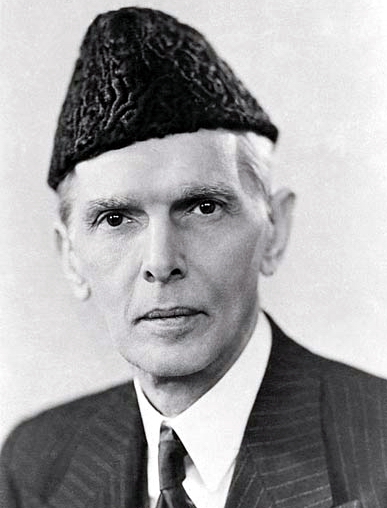
A person who calls for a greater role for religion is by no means a theocrat and a person who calls for the public sphere to be free from an assertive and populist religiosity is by no means anti-Islamic or an atheist. The differing shades of grey have to be appreciated in these complex debates
We have scholars and intellectuals decrying secularism as the root of atheism, moral decadence and spiritual crisis, while on the other hand we have thinkers and intellectuals rooting for secularism. Why is there so much polarisation and so much divergence?
Poor understanding by Muslims is certainly a major cause. Certain religious leaders equate secularism with atheism. However, the history and development of secularism is much more complex than that when viewed against its European backdrop. The great Arab-American intellectual Edward Said famously said, “One of the major failures of most Arab and western intellectuals today is that they have accepted without debate or rigorous scrutiny terms like secularism and democracy, as if everyone knew what these words mean.”
That is fundamentally the problem with the discourse about secularism across Muslim societies, especially when we view this in the Pakistani context. There is a fundamental hermeneutic disconnect about the meaning and connotation of the term. In the eyes of the zealous faithful, it is a stealthy way of infiltrating the citadel of faith and to spread atheism, hedonism and immorality.
For the educated elite and fairly westernised section of Pakistanis who have little or no connection with the religious discourse within their country and across the Muslim world, secularism is a byword for universal justice, promotion of human rights and good governance.
Herein lies the problem. Essentially, it is a communicative and hermeneutic problem. What on earth does secularism mean? The answer is that there is no ‘normative secularism’, just like there is no ‘normative’ or official reading and interpretation of Islam.
Secularity, as a phenomenon, is determined by societies at different junctures and periods of time within different social and cultural contexts. Hence, it can attain a variety of meanings. Secularity is a heterogeneous phenomenon and this complexity must be appreciated.
Therefore, we should take note of the Islamic Iranian reformist philosopher Abdolkarim Soroush who makes a distinction between ‘political secularism’ and ‘philosophical secularism’ and also between ‘objective secularism’, an institutional divide between religion and the state, and ‘subjective secularism’ (in the sense Berger, Bellah and others make), which is the social and psychological decimation of religion from the public conscience. Political secularism is indeed something one should welcome, as it prevents discrimination and injustice and fosters equality and healthy pluralism
Furthermore, there are many types of secularisms, e.g. the French anti-cleric and anti-religion secularism with its focus on mitigating the presence of religious symbols and indeed ‘religious reason’ in the public sphere being one of many. In this model, religious convictions should have no place in the administration of political affairs. In other countries such as Britain, there is an indifference towards religion; a benign secularism is what is present in British politics. The common factor in both cases is that secularism has precipitated into the marginalisation of religion as a cultural, metaphysical and philosophical powerhouse.
In the US, however, secularism is fairly objective rather than subjective. Institutional soft secularism, combined with endeavours to revitalise religious consciousness at the individual level, was exemplified in the American tradition of religious liberty. The Memorial and Remonstrance of James Madison is perhaps the hallmark of religious liberty in the context of the modern nation state. It was a product of the moral and religious reinterpretation and intellectual exertion of a new expression of a rational theology of faith.
It is my contention that Pakistan was meant to be an objectively and institutionally secular state where temporal and religious authority was to be clearly separated but where the political discourse could be determined by religious convictions in society. What is lacking in the social and media narratives of the country is any kind of historical nuance on the origins, development and nature of secularity. Many try and quickly construct neat typologies and homogenise complex events, creating binary constructs that are superficially informed.
The purported clash between ‘secularists’ and ‘Islamists’ (neither label has ever been clearly defined) has been over-emphasised in a recent article published in a national daily (Iqbal Akhund, ‘Secularism vs Islamism’). The writer makes clear that there is an overlapping consensus between these two political narratives. In that article too, he defines the apparent conflict as “confusion over the terms of the debate”.
Hence, secularity does not necessarily mean a call for disbelief, but rather it can mean a cessation for a certain type of authoritarian and totalitarian religiosity. Once some clarity is shed on this debate, we would see that, in reality, there are multiple issues and concerns that are involved and not just a solitary issue over which binary positions can be taken. There are first the political, institutional and constitutional debates about the role of religion. Then there is the concern about the social and public expression of religion, and the influence religion has over the psychology and conscience of the nation.
Muslims must ask whether the state makes society religious or does society make the state religious. The debate is not about the validity of religious reason in the public sphere but on the validity of state religion. Is there a need for one and does the state have to prescribe interpretations and enforce them by force? After all, coerced belief is not belief at all, for belief to be true and deep has to be free. Hence, freedom should be seen as a virtue and friend of religiosity rather than as an enemy.
However, what should be undertaken on all sides of the debate is a willingness to engage and not to demonise each other. A person who calls for a greater role for religion is by no means a theocrat and a person who calls for the public sphere to be free from an assertive and populist religiosity is by no means anti-Islamic or an atheist. The differing shades of grey have to be appreciated in these complex debates. Dialogue can reveal that there are more similarities between the differing narratives on political theory and moral philosophy than there are differences, and this building of a reasoned consensus is the best way to mitigate any tension and promote cohesion.
What is needed is a greater intellectual clarity to define parameters for these debates so the participants agree about the concepts and complex issues at stake, rather than generating controversy due to a hermeneutic disconnect.
The writer is a student at the Royal Grammar School, Newcastle Upon Tyne, England
For more info:
 Mohammed Abbasi