

Exploring Beyond the Speed of Light
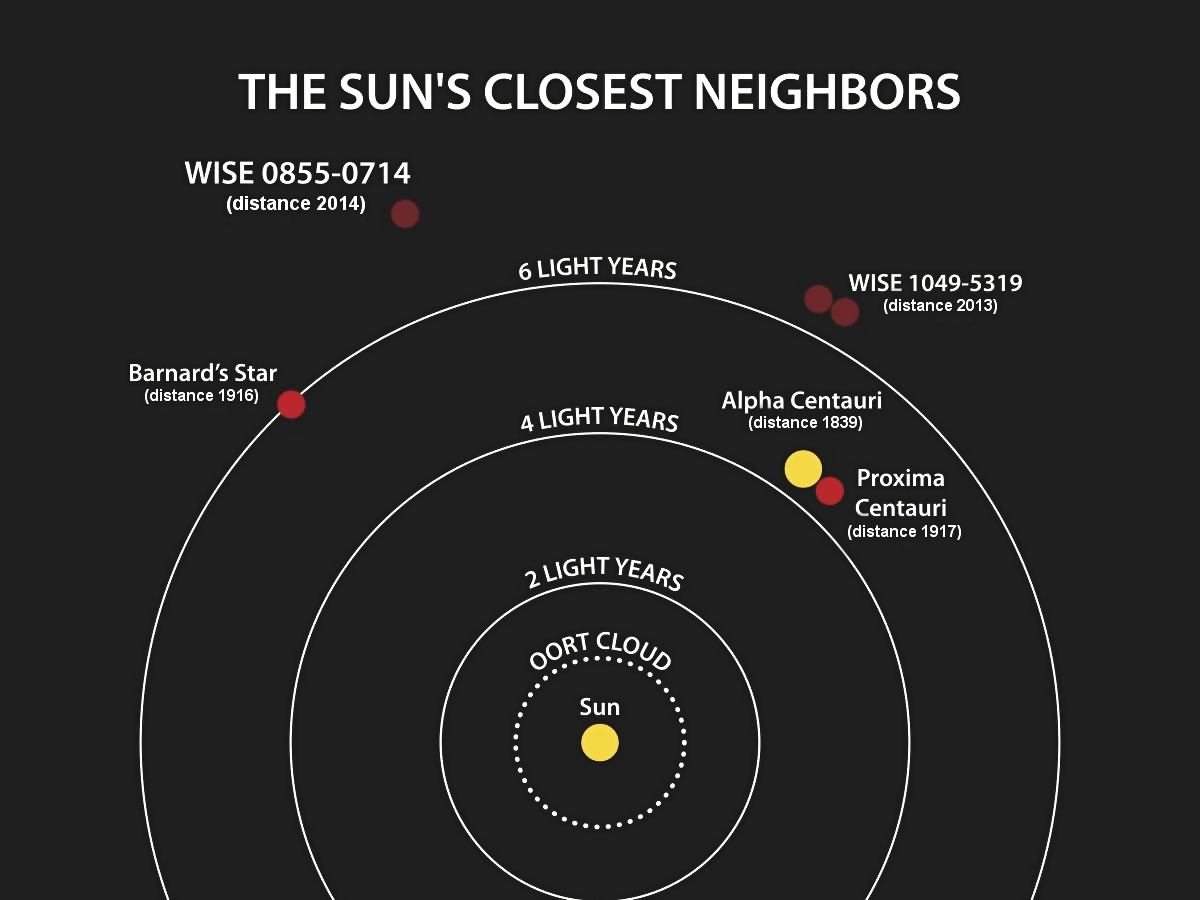
For many years, scientists believed that going faster than the speed of light was impossible. But is this really true?
You see, a famous scientist named Einstein talked about how nothing could travel faster than light. He used light as a way to measure everything in the universe and understand how things move. At first, this made sense because he was thinking about things from a specific perspective.
But some people believe that there is more to the universe than what we can see and measure with light. They think that our minds can imagine and understand things beyond the speed of light. It’s like using our imagination to explore the entire universe without any limits.
Scientists who study space, called cosmologists, think that the universe is like a giant sphere. But if that’s true, then there must be a special point at the centre of the sphere. This point could be a reference for everything else, even if we can’t see or reach it because it’s outside of our view.
To understand this better, we need to talk about forces like gravity and electricity. These forces get weaker the farther they travel. Scientists have found that these forces follow a special rule called the inverse square law, which means they get weaker as the square of the distance increases.
If the universe had more than three dimensions, like four or more, these forces would follow a different rule. They would get weaker as the cube of the distance, which is a fancy way of saying they would get weaker much faster.
But when scientists study the laws of physics, they find that our world has exactly three dimensions and not more. This is because of something called the conservation of energy and charge, which means that energy and electric charge must be preserved in our universe.
So, why did Einstein say that nothing can go faster than light? Well, long ago, there was an important experiment called the Michelson-Morley experiment. They tried to prove that light waves move differently depending on the direction they go. But they found that no matter how they looked at it, light always travelled at the same speed.
Since then, scientists have believed that the speed of light is the fastest speed in our universe. They think that it’s like a wall that we can’t break through. But some scientists still wonder if there might be a way to go faster than light.
They imagine things like wormholes, which are like tunnels through space that could take us to faraway places quickly. They also talk about warp drives and other cool ideas that could help us travel faster.
Right now, these ideas are just theories and speculations. Scientists are working hard to understand them better and find ways to explore beyond the speed of light. It’s like a big adventure, and they’re excited to learn more about the secrets of the universe.
So, even though we can’t go faster than light right now, we should always remember that science is all about discovering new things and pushing the boundaries of what we know. Who knows what amazing discoveries the future holds? The quest for knowledge and the wonder of exploring space will continue to inspire us on our journey.
The Centaurian Journey: A Civilizational Odyssey
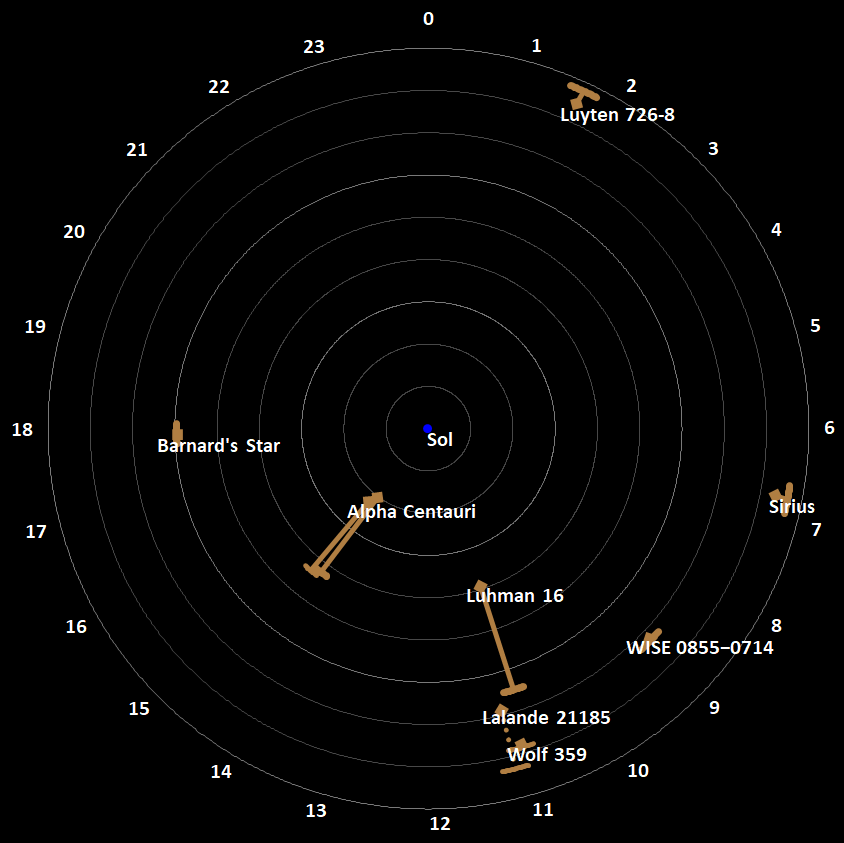
Imagine a distant star system let’s say Alpha Centauri, one of the stars is a G2-type star similar but around 300 million years older than our own sun, and slightly larger. Gracing this celestial stage are fifteen planets, with eight resembling the sizes from Mercury to Venus, and Earth. It is upon this extraordinary planetary canvas that a humanoid species thrives, their physical stature slightly shorter and more robust than their Earth terrestrial counterparts, owing to the planet’s slightly larger dimensions.
Over the course of millennia, this remarkable civilization embarked on a trajectory mirroring our own earthly odyssey. They achieved their industrial revolution around 33,000 BCE, they, too, grappled with power struggles and societal conflicts, emerging victorious through their collective resilience and tenacity. However, their path forward was beset by a cataclysmic event – a world war that erupted approximately 1,500 years later, devastating 95% of their population.
From the ashes of this apocalyptic conflict, the Centaurians arose again, forging a new destiny characterized by slower-paced technological advancement, interwoven with the development of their spiritual and intellectual prowess. In a world shaped by profound loss, they nurtured their capacity for introspection, philosophical contemplation, and an insatiable hunger for knowledge. The scars of their history became a driving force, propelling them toward a holistic civilization where the pursuit of wisdom and enlightenment reign supreme alongside trade and commerce with other star systems.
Astounding scientific achievements punctuated their journey, culminating in a groundbreaking feat – the mastery of interstellar travel. In the year 24,750 BCE, the Centaurians, aided by an ancient civilization predating their own, ventured beyond the boundaries of their home system, they reached Earth and its neighbouring planets in the year 24,400 BCE. Their exploration unveiled remnants of another humanoid civilization scattered amidst the debris of the asteroid belt, once a flourishing domain now suspended between Mars and Jupiter.
Today, the Centaurian government diverges from the traditional notion of a formal governance structure, morphing into a council of revered elders. These luminaries embody the pinnacle of intellectual and spiritual prowess, guiding the destinies of their civilization. Below them, a tapestry of workers, scientists, teachers, and military personnel weave together a society devoid of hierarchical power structures reminiscent of our own Earthly institutions.
It is essential to note that, in the Centaurian paradigm, this absence of hierarchy is not considered a mark of primitiveness. Instead, they exist as a testament to a civilization embracing alternative systems of governance, where wisdom and enlightenment prevail.
However, beyond the celestial shores of the Alpha Centauri system, civilizations even more advanced than the Centaurians flourish. These cosmic counterparts boast governance structures akin to Earth’s presidents, kings, and spiritual leaders such as popes others exist without any form of formal governance, and some exist led by machine and matter combined.
It is within this vast cosmic tapestry that humanity finds itself as just one strand, woven intricately alongside diverse and awe-inspiring civilizations. As we contemplate the Centaurian journey, we are beckoned to ponder our own place in the cosmic ballet, forever driven by the pursuit of knowledge and understanding that transcends the boundaries of our terrestrial home.
Mohammed Abbasi
 Mohammed Abbasi