

In military history, few commanders have left a mark as indelible as Khalid ibn Walid. Known for his strategic brilliance and tactical acumen, Khalid’s campaigns during the 7th century AD were instrumental in the expansion of the Muslim empire.
Let us briefly examine Khalid ibn Walid’s operational art in his campaign against the Sassanid Persian Empire in Mesopotamia. How do his strategies align with modern concepts of operational art and how do they compare to the principles of Sun Tzu and Carl von Clausewitz.
Khalid’s Operational Art:
Khalid bin Walid’s success can be attributed to his adept application of key characteristics of operational art. His strategies displayed the following elements:
- Operational Objectives: Khalid meticulously developed operational objectives by balancing the demands of strategic aims with tactical considerations. He aimed to seize Persian territories swiftly and efficiently, despite resource limitations. This cognitive tension ensured a cohesive and goal-oriented approach.
- Disruption of Enemy Forces: Khalid’s actions were oriented towards disrupting the enemy’s system of forces. He employed swift offensive operations, mobile warfare, and surprise attacks to unsettle and disorient the Persian forces. By constantly challenging their equilibrium, he weakened their ability to respond effectively.
- Operational Maneuver: Khalid’s operational approach involved maneuvering his forces to achieve local superiority. He strategically positioned his units to gain advantages over the enemy, exploiting weaknesses and maximizing the impact of his tactical actions. This maneuvering allowed him freedom of action and contributed to his overwhelming successes.
- Accumulation of Tactical Effects: Khalid’s operational approach focused on accumulating the effects of tactical actions in pursuit of strategic objectives. His sequential and simultaneous operations aimed to maintain initiative and ensure a continuous stream of victories. By compounding the impact of his tactical successes, he secured long-term strategic gains.
- Conformity to Broad Theories: Khalid’s actions aligned with a broad and universal theory of warfare. His strategies adhered to the Quranic concept of war, which emphasized coherence, discipline, and moral conduct. This framework provided a comprehensive foundation for his operational decisions and resonated with the conquered populace.
Comparison with Sun Tzu and Carl von Clausewitz:
Khalid ibn Walid’s strategies share similarities with those of Sun Tzu and Carl von Clausewitz. All three strategists recognized the importance of disrupting the enemy’s forces and maintaining initiative. Khalid’s focus on maneuver and accumulation of tactical effects aligns with Sun Tzu’s emphasis on surprise, deception, and the indirect approach. Similarly, Clausewitz’s concept of concentrating force at the decisive point finds resonance in Khalid’s pursuit of local superiority.
Differences:
Khalid’s strategies were deeply influenced by religious principles, making them distinct from the more secular philosophies of Sun Tzu and Clausewitz.
Additionally, Khalid’s operational approach exhibited a greater emphasis on rapid and continuous offensive actions, whereas Clausewitz acknowledged the value of defensive strategies.
Khalid ibn Walid’s campaign against the Sassanid Persian Empire exemplified the application of operational art in ancient warfare. His strategies incorporated operational objectives, disruption of enemy forces, operational manoeuvre, accumulation of tactical effects, and conformity to a broad theory.
While there are similarities with the principles espoused by Sun Tzu and Clausewitz, Khalid’s approach was uniquely shaped by religious considerations and the constraints of his time. His strategic brilliance remains an enduring testament to the art of warfare.
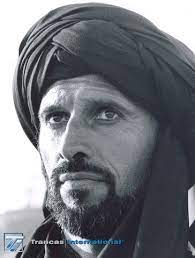
Mohammed Abbasi
 Mohammed Abbasi