

Mexico’s Unusual Diplomatic Boost to Russia Raises Questions
By Mohammed Abbasi
23.09.2023
- Mexico has increased the number of Russian diplomats in its capital, Mexico City, by authorizing 37 new diplomats in addition to the existing 49, giving Russia the largest diplomatic contingent in Mexico.
- This diplomatic surge is unusual given the historically low-level relationship between Mexico and Russia, raising questions about its purpose.
- Russia has a reputation for using its diplomats for espionage, particularly against the United States, making Mexico’s move a matter of concern.
- The surge in Russian nationals entering Mexico, some seeking to give birth to anchor babies for easier immigration to the United States, suggests a deeper involvement of Russian intelligence services.
- The Mexican government’s reluctance to address the issue and its recent participation in Russia’s Independence Day parade have raised concerns about its stance on Russian espionage.
- U.S. officials are cautious in publicly criticizing Mexico’s acceptance of Russian spies due to Mexico’s cooperation in curtailing undocumented migration to the U.S.

Mexico’s recent authorization of 37 new diplomats in the Russian Embassy in Mexico City, in addition to the existing 49, has raised eyebrows and concerns about the purpose behind this unusual move. While Western countries have been cracking down on Russian espionage in the wake of Russia’s invasion of Ukraine in February 2022, Mexico appears to be swimming against the tide by increasing Russia’s diplomatic presence.
Currently, Russia boasts the largest diplomatic contingent in Mexico City, surpassing even the American Embassy, which has 46 diplomats. This significant increase in Russian diplomats raises questions about the true nature of their activities, given the historically low-level relationship between Mexico and Russia. Trade between Mexico and Russia is equivalent to just one day of business between Mexico and the United States.
It is no secret that Russia has a long-standing practice of using its diplomats for espionage, particularly against the United States. The imposing Russian embassy complex in Mexico City, complete with large satellite dishes on its roof, has earned a reputation as an espionage safe haven, especially during times of conflict. During the Cold War, U.S. intelligence estimated that at least 150 KGB officers operated in Mexico under diplomatic cover.
While the CIA has historically maintained a robust presence in Mexico for security cooperation with the United States, Mexico passed a law in 2020 limiting the number of all foreign agents and stripping them of diplomatic immunity. This move did not deter Russian espionage activities.
According to John Feeley, a retired U.S. ambassador specializing in Latin American security issues, “Spies almost always operate under diplomatic cover, and Mexico has always been a number one target for Russia because of its proximity to the U.S.” He highlights Mexico’s convenience as a location for spying on the U.S., where Russian undercover assets can travel as tourists to places like Cancun for debriefing.
The surge in Russian nationals entering Mexico in 2022, particularly in tourist hotspots like Cancun, has raised suspicions. While some are fleeing the war in Ukraine, others are individuals and couples looking to give birth to anchor babies, granting them easy access to Mexican immigration papers and passports for travel to the United States.
Russian intelligence services are believed to be behind this sudden influx of Russian nationals, a tactic seen in other countries where Russian spies carried Latin American identity papers. The Mexican government’s lack of action on this matter raises concerns about its stance on Russian espionage.
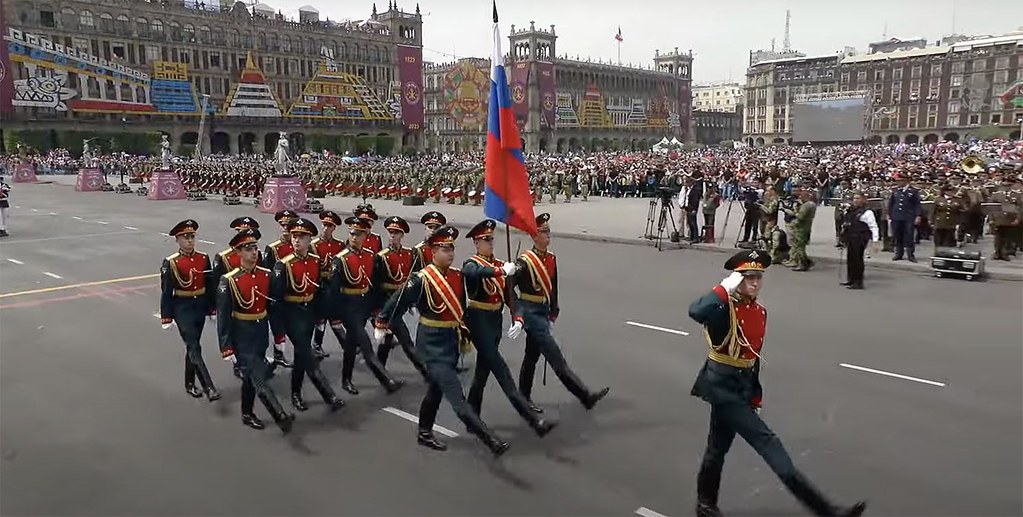
While FBI Director Christopher Wray has expressed concerns about the number of Russian spies operating inside the United States, the Mexican government seems to allow Russian agents to work with minimal restraint as long as their focus is on the U.S. President Andrés Manuel López Obrador has taken a neutral stance in the Russia-Ukraine conflict, even allowing a Russian regiment to participate in Mexico’s Independence Day parade, causing outrage among Mexicans and the Ukrainian ambassador.
General Glen VanHerck, head of the U.S. Northern Command, has noted that there are more Russian military spies in Mexico than in any other country worldwide. However, AMLO dismissed these concerns, and American officials, appreciative of Mexico’s cooperation in curbing undocumented migration, have been cautious about criticizing Mexico’s acceptance of Russian spies publicly.
While the exact extent of counterespionage operations by the CIA and other U.S. intelligence agencies based in Mexico City remains undisclosed, their efforts to counter Russian espionage may face challenges. The effectiveness of these efforts depends on the number of deployed CIA officers and available technological resources.
In summary, Mexico’s decision to expand its Russian diplomatic presence has raised suspicions about its motivations, particularly given Russia’s history of espionage activities. The surge in Russian nationals entering Mexico further underscores concerns about the involvement of Russian intelligence services. Mexico’s reluctance to address these issues and its participation in Russia’s Independence Day parade have raised questions about its stance on Russian espionage. U.S. officials, mindful of Mexico’s cooperation on immigration issues, have been cautious about publicly criticizing Mexico’s acceptance of Russian spies.
 Mohammed Abbasi